

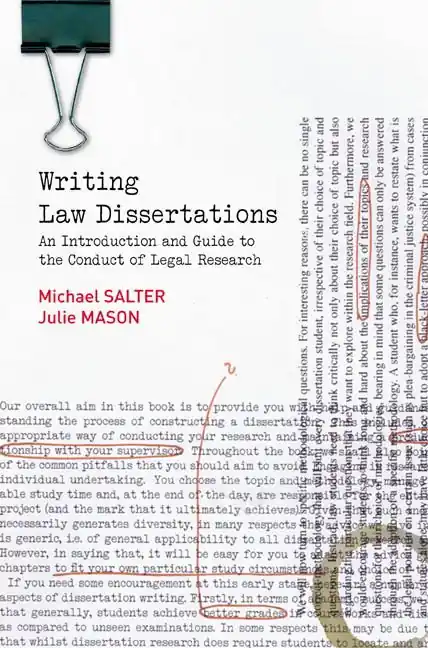



Beskrivning
Beskrivning
CONTENTS
Introduction
Chapter 1. How to Begin
– Introduction
– What is ’research’?
– What is a ’dissertation’?
– How to choose your dissertation topic
– Specific suggestions for getting you started
– Identifying the key issues and marginal issues in your dissertation
– Is the research viable in practice?
– Putting pen to paper
– Conclusion
Chapter 2. Getting Along With Your Supervisor
– Introduction
– Choosing your supervisor
– When to choose
– What can you expect from your supervisor?
– The role of the dissertation supervisor
– Devise your own ’learning contract’
– At the beginning of your supervision
– Writing the dissertation
– Meeting your supervisor
– Reviewing draft chapters
– How much supervision?
– Making the most of constructive criticism and formative feedback
– Common problems with supervision
– Conclusion
Chapter 3. Selecting Suitable Approaches to the Conduct of Dissertation Research
– Introduction
– Resistance to methodological discussion
– Positive reasons for engaging in methodological discussion
– Recognising the implications of the tension between different research methodologies
– Avoiding the pitfalls of selecting an inappropriate methodology
– Conclusion
Chapter 4. Black-Letter Approaches to Doctrinal Research
– Introduction
– Towards a provisional working definition: black-letter law as legal formalism
– Other features of the black-letter approach
– The centrality of classic textbooks
– Insulating the dissertation topic from external factors
– Setting and answering the question: what is the legal position on X?
– The requirement to reveal a system of underlying principles ordering legal rules
– Searching for coherence and systematic order
– Legal principles and rules are largely determinate
– The standpoint of black-letter analysis
– Wider strategies of selective exclusion
– The focus on law in books
– Deductive methods of reasoning from first principles
– Law as a distinct and unique discipline
– The restricted character of black-letter forms of criticism of law
– Questions of evaluation: the advantages and problems of black-letter analysis
– Conclusion
Chapter 5. Sociolegal Approaches to the Conduct of Dissertation Research
– Introduction
– Defining sociolegal studies
– The diversity of topics and themes addressed by sociolegal studies
– The emphasis on law in action
– Policy and the power of ideologies
– The diversity of research methods used in sociolegal studies
– Ethical and other normative dimensions
– Strengths and criticisms of sociolegal approaches
– Conclusion
Chapter 6. Comparative and Historical Methods – Introduction – Comparative approaches – Comparative historical approaches – Historical methodologies more generally – Sociolegal histories of criminal justice – The legal regulation of property and housing – International and comparative sociolegal histories – Public law, civil liberties and human rights – Social welfare and family policy – The legal regulation of professions – Black-letter versions of legal history – Conclusion Conclusion Further Reading and Bibliography